

Before a single guest sees your colour palette or your florals, they read your words. The wording on your save the dates and invitations is the first thing your guests see, whether they picture a black-tie ballroom or a backyard barbecue before they even open the envelope. So how do you know whether to write in a way that feels casual and warm, or formal and traditional?
There's no single right answer here, only the one that sounds like you and your partner, and matches the kind of celebration you're planning. In this post, we'll walk through what actually separates casual wording from formal wording, look at real examples for both save the dates and invitations, and help you figure out which one fits your wedding.
In this post, we'll explore:
- What makes wording read as casual versus formal
- Save the date wording examples
- Invitation wording examples
- How to decide which style matches your wedding
What Makes Wording Casual or Formal
The difference usually comes down to a handful of small choices. Formal wording tends to use full names and titles, "Mr. and Mrs." instead of first names only, phrases like "request the honour of your presence" instead of "join us," and a traditional structure that names the hosts before the couple.
Casual wording drops the titles, speaks the way the couple actually talks to their friends, and often leads with the couple's own names rather than their parents'. Neither style is more correct than the other. A backyard wedding with a barbecue reception calls for different wording than a formal ballroom celebration, and matching the two makes a real difference to how your guests read the invite.
Save the Date Wording, Casual vs. Formal

A casual save the date might read:
"We're tying the knot! Save the date, June 14, 2027, for Emily & Jordan. We can't wait to celebrate with you in Muskoka. Details to come!"
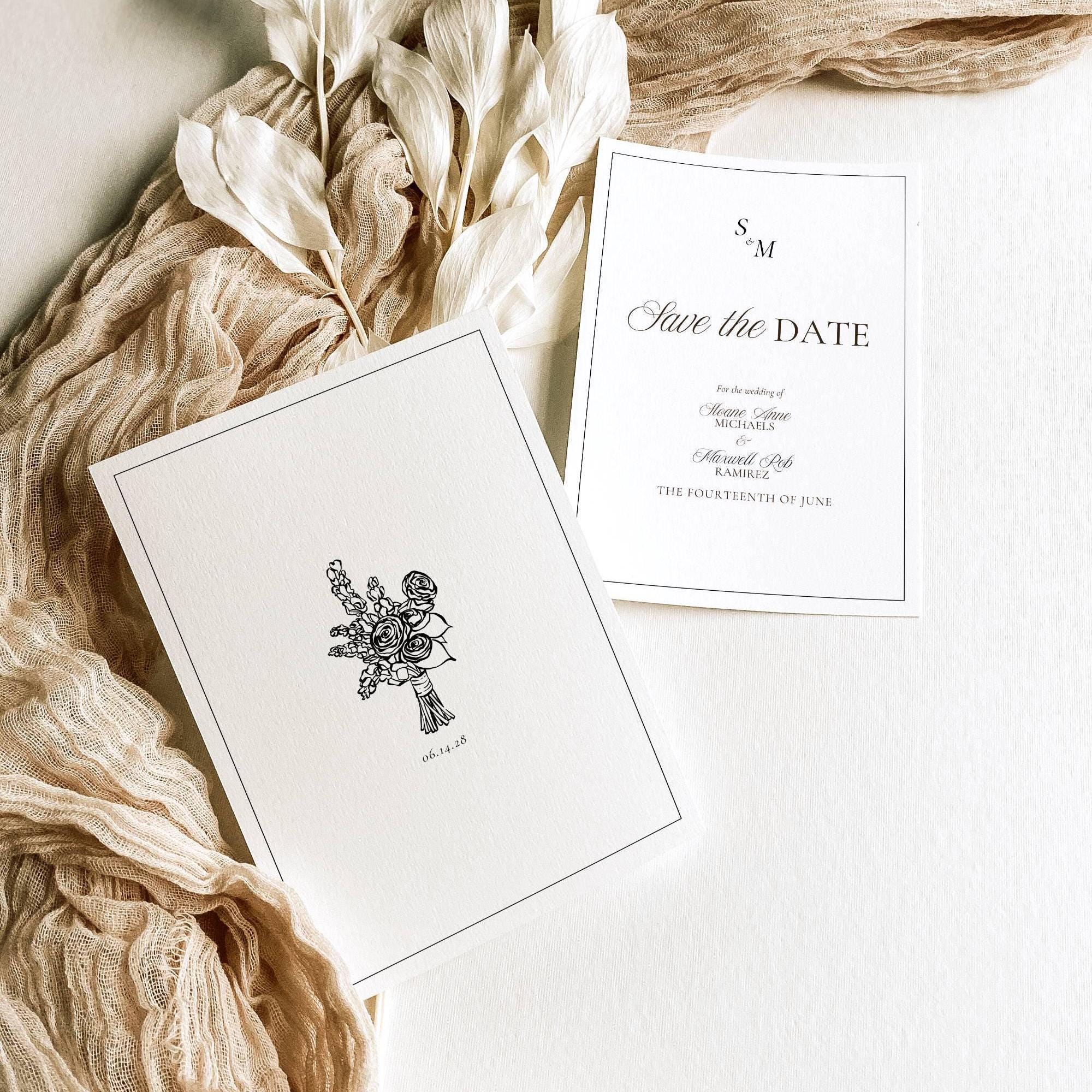
A formal save the date might read:
"Please save the date for the marriage of Sophie Anne Carter and Nathaniel James Whitfield, Saturday, September 18, 2027, in Niagara-on-the-Lake, Ontario. Formal invitation to follow."
The casual version reads like a message you'd send a close friend, short, warm, a little excited. The formal version reads like an announcement: complete names, complete sentences, no exclamation points.
Invitation Wording, Casual vs. Formal

A casual invitation might read:
"Emily & Jordan are getting married, and we'd love for you to be there! Join us as we say "I do" on June 14, 2027 at Cedar Grove Farm, Muskoka. Reception to follow: dinner, dancing, and cocktails."
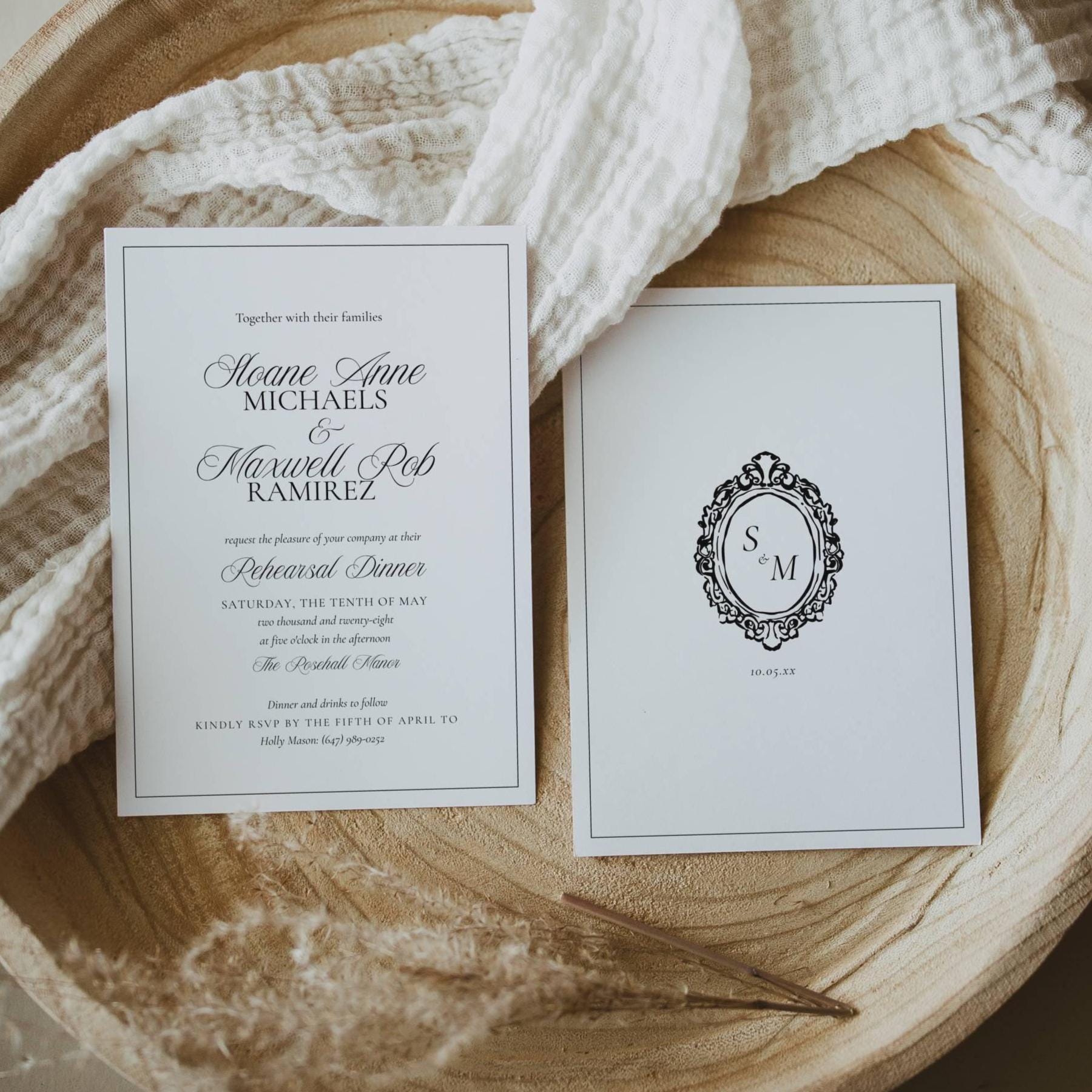
A formal invitation might read:
"Together with their families, Sophie Anne Carter and Nathaniel James Whitfield request the honour of your presence at their marriage, on Saturday, the eighteenth of September, two thousand twenty-seven, at five o'clock, The Pillar and Post, Niagara-on-the-Lake, Ontario. Reception to follow."
Notice how the formal version names the families first, uses full titles, and spells the time out in words rather than numbers. The casual version speaks directly from the couple to the guest, in their own words.
How to Choose Which Style Fits Your Wedding
A few questions can help you decide:
- What's your venue? A ballroom, a historic estate or a vineyard often leans formal. A backyard, a brewery or a beach leans casual.
- What's your dress code? If you're asking guests to wear black tie, your wording should match that same level of formality.
- How do you and your partner actually talk, to each other and to your friends? Your invitation should sound like the two of you, not like a stranger wrote it.
You don't have to pick one extreme either. Plenty of couples land somewhere in the middle: full names without the formal titles, or a warm opening line followed by traditional wedding details. The goal is for your guests to open the envelope and get a feel for the day ahead, right from that first line.
Final Thoughts: Which Is Right for You
There's no wrong choice between casual and formal wording, only the one that sounds like you. Whichever direction you lean, keep it consistent across your save the dates, your invitations, and your day-of signage, so your wedding feels cohesive from the first envelope to the last thank-you card.
If you're still mapping out when each piece of your stationery should go out, our free Wedding Stationery Timeline & Checklist walks you through exactly when to send your save the dates, your invitations, and your thank-you cards, so nothing gets left to the last minute.